Thursday, February 27, 2020

The USA's leaked supergun!

The US Army began the development of its ‘Strategic Long-Range Cannon (SLRC) in late 2019, with the weapon expected to have a range of up to 1,850 km. The military expects a demonstration prototype to be created by 2023.
The Twitter account of the US Army’s Combat Capabilities Development Command Research Laboratory has shown what appear to be the first prototype images of the SLRC supergun, with a high-res photo of engineers speaking to US and British officers showing an image of the SLRC in the background, with its overall design and key capabilities clearly visible.
The @USArmy hosted a US-UK Modernization Demonstration Event Feb. 20 at @USAGAPG to identify capability collaboration to the British Army. Officials from @ArmyFutures
@USArmyCCDC , the centers and the lab, briefed interoperability to minimize risks of #modernization divergence. pic.twitter.com/Hw3V7xJFgA
— U.S. Army CCDC Army Research Laboratory (@ArmyResearchLab)
February 21, 2020
An image of the unit shows that it is transported by a conventional 14 wheel military hauler, possibly an Oshkosh M1070 of the kind used to carry tanks, with the gun attached to the transport via two separate pieces.
According to the poster printed out by Army Futures Command, the system is designed to penetrate and destroy “enemy A2/AD [anti-access/area denial] defences to create windows of opportunity for exploitation.” The system is expected to have a range “beyond 1,000 miles,” a crew of 8 personnel per platform, and 4 platforms per battery. The system is designed to be transportable by sea and air.
The photos of the SLRC were taken at a joint US-UK ‘Modernization Demonstration Event’ at the Aberdeen Proving Ground northeast of Baltimore, Maryland on February 20. US officials were said to have briefed their British comrades on interoperability “to minimize risks of #modernization divergence.”
The SLRC programme is designed in part to serve as a cost-effective alternative to more expensive munitions, with rounds for the system expected to cost “only $400,000 or $500,000” apiece compared to the multi-million dollar apiece missiles. Last year, Col. John Rafferty, director of the Army’s Long-Range Precision Fires Cross Functional Team, said that if the SLRC was adopted, it would complement the military’s hypersonic missiles in penetrating enemy territory at a “more affordable” price per shot.
Late last year, Russian aerospace and defence giant United Aircraft Corporation confirmed that new weapons systems designed especially for the Su-57 had been developed or were in active development, without elaborating.
A prototype hypersonic missile designed for use aboard Russia’s new Su-57 fifth-generation stealth fighter has been created, a defence sector source had told Russian media.
The source described the missile as a small, air-to-surface weapon designed to be carried inside the plane’s fuselage, and said it has yet to be tested aboard the plane.
No other details about the weapon’s characteristics or who developed it were made available, and the reports have yet to be commented on by anyone at UAC, Sukhoi or the military.
The defence sector first teased the possibility of deploying hypersonic missiles similar to the Kinzhal hypersonic, nuclear-capable missile in 2018. Kinzhal was deployed into service aboard the MiG-31K in December 2017, and a version of the missile for the Tu-160 ‘White Swan’ strategic bombers is also being developed. The weapon is believed to have an operational range of up to 3,000 km, and a flight speed of Mach 10-Mach 12 (12,250-14,700 km per hour).
Large-scale deliveries of the Su-57 into Russia’s aerospace forces are expected to begin later this year . The aircraft is a fifth-generation stealth superiority fighter created by the JSC Sukhoi Company. The planes are intended to eventually replace the MiG-29 and Su-27 in Russia’s Aerospace Force and Navy, and are equipped with advanced avionics, airborne active phased radar, ELINT and a variety of high-precision weaponry.

Russian first S-350 Vityaz medium-range air defence missile system

The first S-350 Vityaz medium-range air defence missile systems have been added to the Russian air force's arsenal, the Defence Ministry said on Wednesday.
"The first newest S-350 Vityaz air defence missile systems have been added to the Russian air force's arsenal. [The systems] have recently been deployed to the training centre of the anti-aircraft missile forces in Gatchina [a city in the Leningrad region]," the ministry said in a statement.
The ministry added that the centre had already run tests with the S-350 aimed at detecting and destroying conventional hostile aircraft.
Newest S-350 Vityaz Air Defence System

According to the ministry, the air defence missile systems will help make the air force two times more effective in countering cruise missile strikes and replace the older S-300PS system.
In mid-January, the ministry said that Russia's Leningrad region would be the first to host the air defence missile systems.
The S-350 was developed by the Almaz-Antey concern and first showcased at the International Military-Technical Forum Army-2019.

The Pentagon to hold a top secret meeting on the "Sino-Russian alignment " next week


The Pentagon will hold top-secret talks on the so-called "Sino-Russian alignment," a notice published in the Federal Register said on Wednesday.
"On March 3-4, 2020 the Defence Policy Board (DPB) will have classified discussions on national security implications related to Sino-Russian alignment," the notice said.
The top-secret talks will take place at the Pentagon, and the speakers will include senior intelligence community officers, Defence and Treasury Department officials, as well as experts, it added.
The participants will discuss their perspectives, views and insights and review classified information on relations between Russia and China, the notice said. They are also expected to provide recommendations to the Secretary of Defence.

Wednesday, February 26, 2020

Be aware of the proton VPN you are using.Your internet activities are not secure

Hackers used fake ProtonVPN installers to infect users with nasty Azorult malware.
One of the easiest ways to lure users to install malware on their computers is to imitate legitimate websites. This is exactly what certain attackers have done as recently investigated by researchers at Kaspersky by targeting ProtonVPN.
For the unfamiliar, ProtonVPN is a Swiss-based product by the very same company that operates the very famous ProtonMail. Currently, ProtonVPN has more than 2 million users around the world and that makes it a lucrative target for cybercriminals.
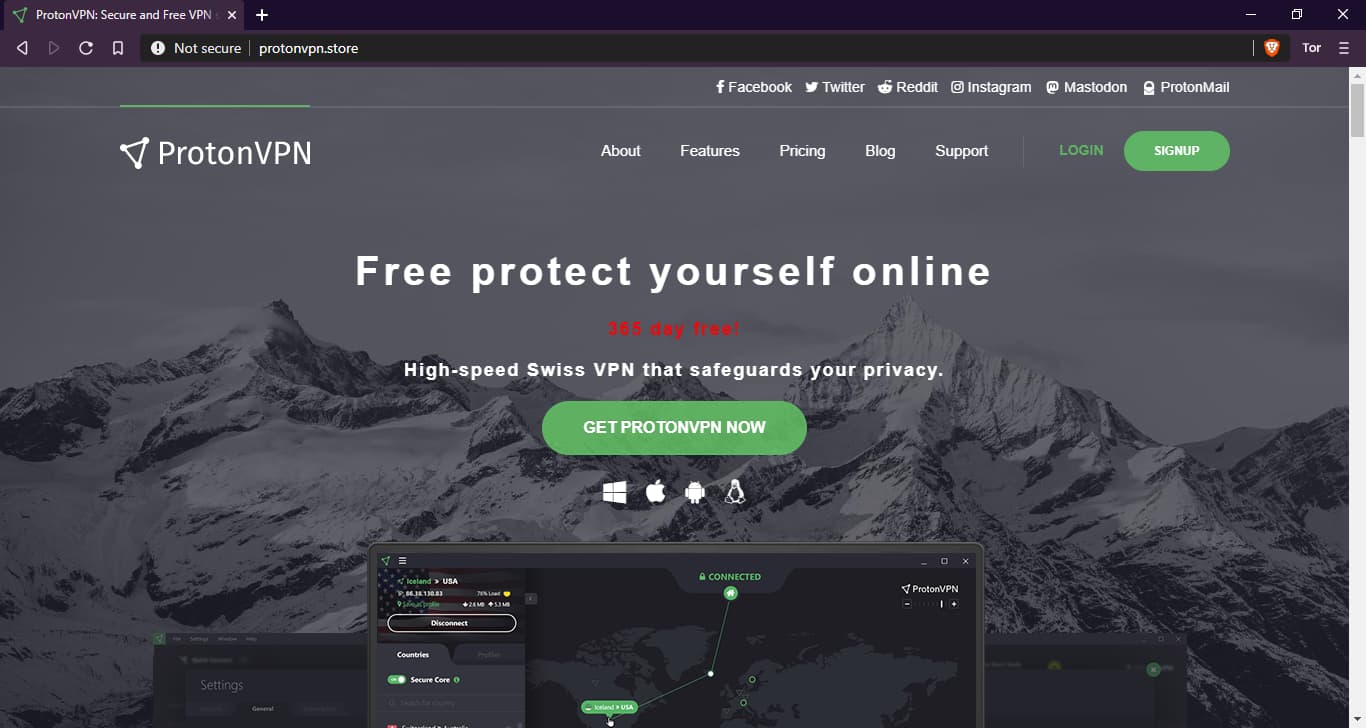
According to Kaspersky, hackers have cloned the design of ProtonVPN’s official website (protonvpn[.]com) to drop AZORult malware through its installer file.
Snapshot of the fake ProtonVPN website:
For your information, Azorult is a RAT (remote access Trojan) that can infect any computer successfully. Azorult was previously found targeting thousands of Magneto sites and spreading PayPal themed banking malware. The same malware was caught last month spreading itself using Drake’s “kiki do you love me” song.
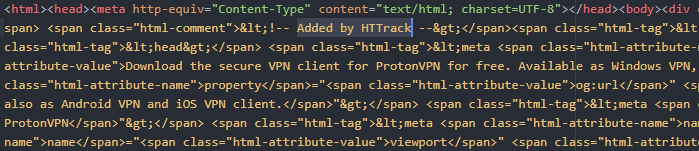
According to Kaspersky’s blog post, to clone the website successfully, hackers made use of a program named HTTrack which made the fake website look similar in its design to the real one.
Fake ProtonVPN installers infect users with malware
A comment indicating the user of HTTrack for the site’s clone.
Therefore, if a user did not know of the original site’s exact domain, they would naturally believe that the site they are visiting is indeed legitimate and hence proceed to download the ProtonVPN installer.
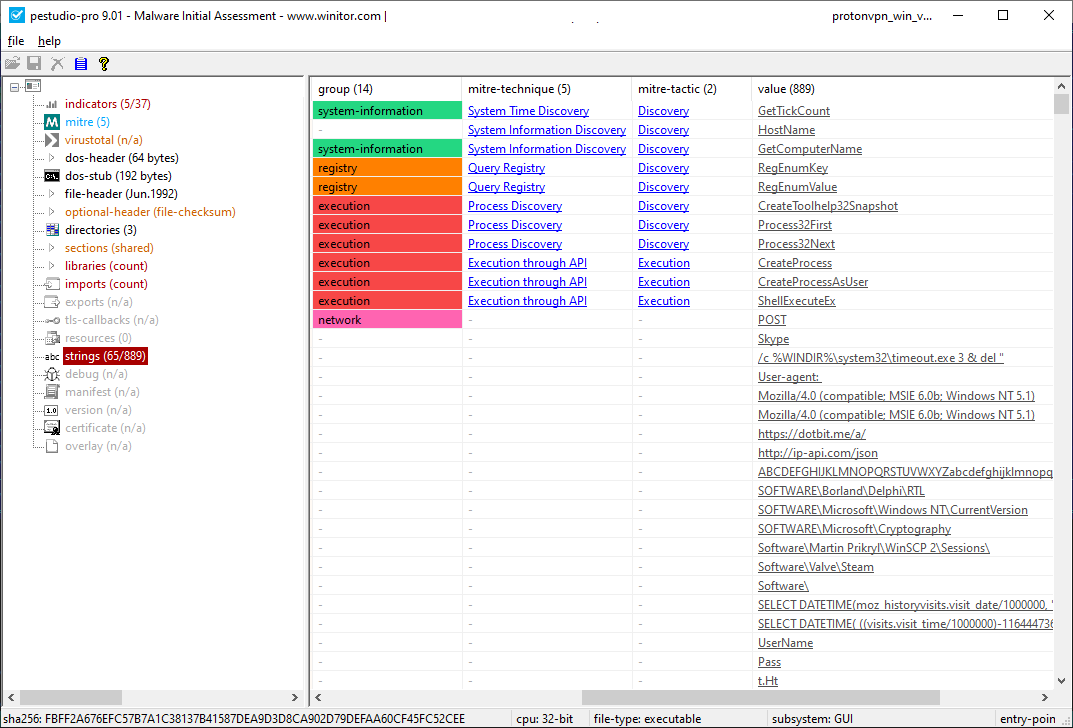
However, instead, they would get AZORult malware in the form of a file named ProtonVPN_win_v1.10.0[.]exe which then can collect highly sensitive information such as one’s passwords, financial information, browsing history, cookies & much more once installed.
The data collected is then relayed to the attackers through their C2 server, also located on their fake website at accounts[.]protonvpn[.]store.
To take things a step further, the AZORult can also steal your cryptocurrencies from any wallets that are locally installed on your computers such as Electrum along with “credentials for WinSCP, Pidgin messenger, and others.”
Fake ProtonVPN installers infect users with malware
A snapshot of an analysis being done by Kaspersky of the malware.
To add to this, the fake domain was registered in November 2019 through a Russian registrar service. Since then, the attackers have also started targeting users through malicious advertising campaigns, more specifically “affiliation banners networks.”
To conclude, there have been several similar incidents in the past and we can expect them to keep occurring. An example was when we saw fake sites claiming to be official Fortnite distributors spring up prompting users to download malware in actuality. Last year, hackers used similar tactics by cloning the NordVPN website to drop banking trojan.

Tuesday, February 18, 2020

Iranian hackers targeting Israel!


The new report claims that Iranian hackers have been targeting Israel and other countries with this campaign.

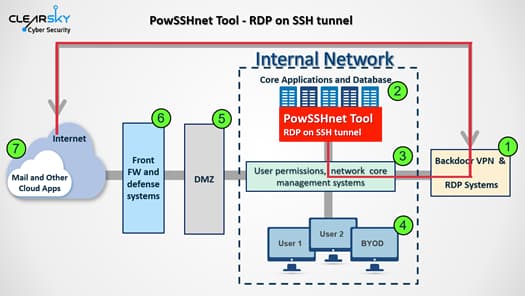
According to the findings of the UK-based cybersecurity firm ClearSky, an Iranian APT group has been running a widespread hacking campaign to compromise VPN servers and install backdoors or bugs to access networks of different organizations across the globe. 
Dubbed Fox Kitten; the campaign was launched three years back (2017) to target “dozens of companies and organizations in Israel around the world,” the company stated in its official statement.
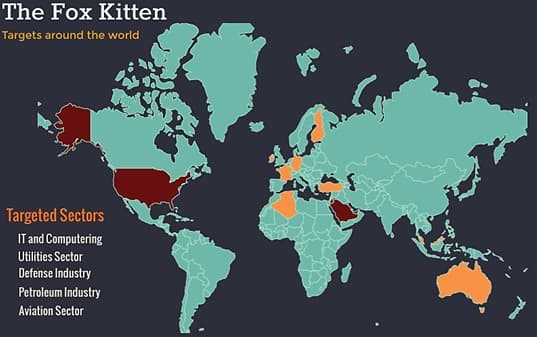
The attackers successfully infiltrated networks of many organizations across diverse sectors from IT, oil and gas, telecom, security, and government. The organizations have footprints throughout the world, which makes this campaign a global scam.
Irani hackers hacked vpn
Image credit: ClearSky
The alarming fact is that during this operation, Iranian hackers not only gained access to the networks of so many organizations around the world but made sure that they were able to hijack the device for as long as they wanted to.
Using the campaign, hackers could develop and maintain access routes to their target companies and obtain sensitive data.
“Hackers maintained a long-lasting foothold at the targeted organizations and breach additional companies through supply-chain attacks,” researchers said in their blog post.
To pull off the attack, hackers used different tools, a majority of which were open-source software while some were self-enveloped. As per previous research, the most successful attack vector that Iranian hackers have used so far is the exploitation of systems vulnerabilities encouraged by unpatched RDP and VPN services.
Irani hackers hacked vpn
Image credit: ClearSky
Once they are able to access the organizational networks, they tend to create more access points to reach the core corporate network. This is why closing one access point doesn’t affect their capability of monitoring company networks.
In fact, ClearSky claims that Iranian APT groups can exploit VPN flaws in a few hours, as soon as the bug is disclosed. ZDNet reports that Fortinet, Pulse Secure, Citrix VPNs, and Palo Alto Networks are some of the targets of Iranian hacker groups.